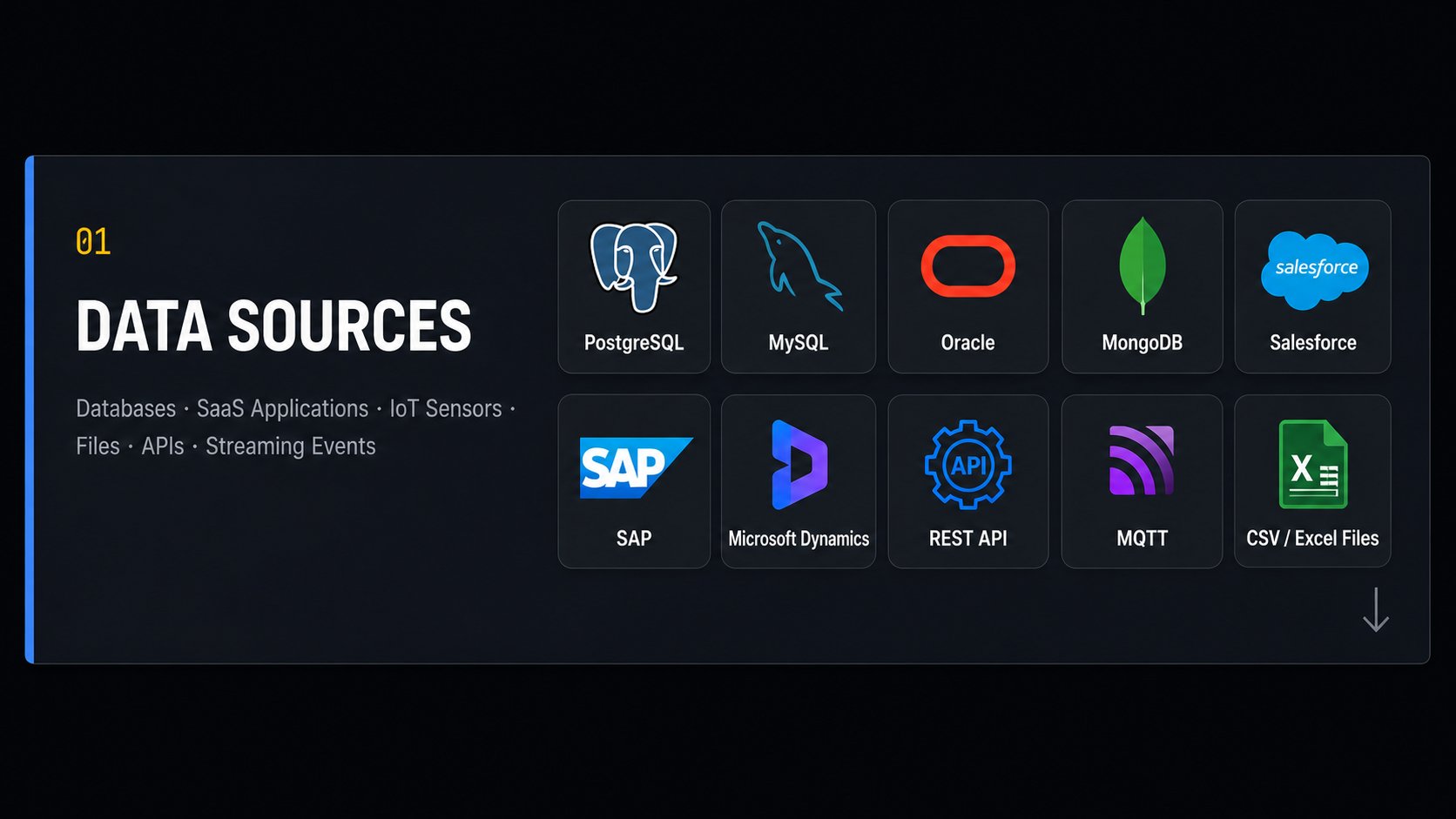
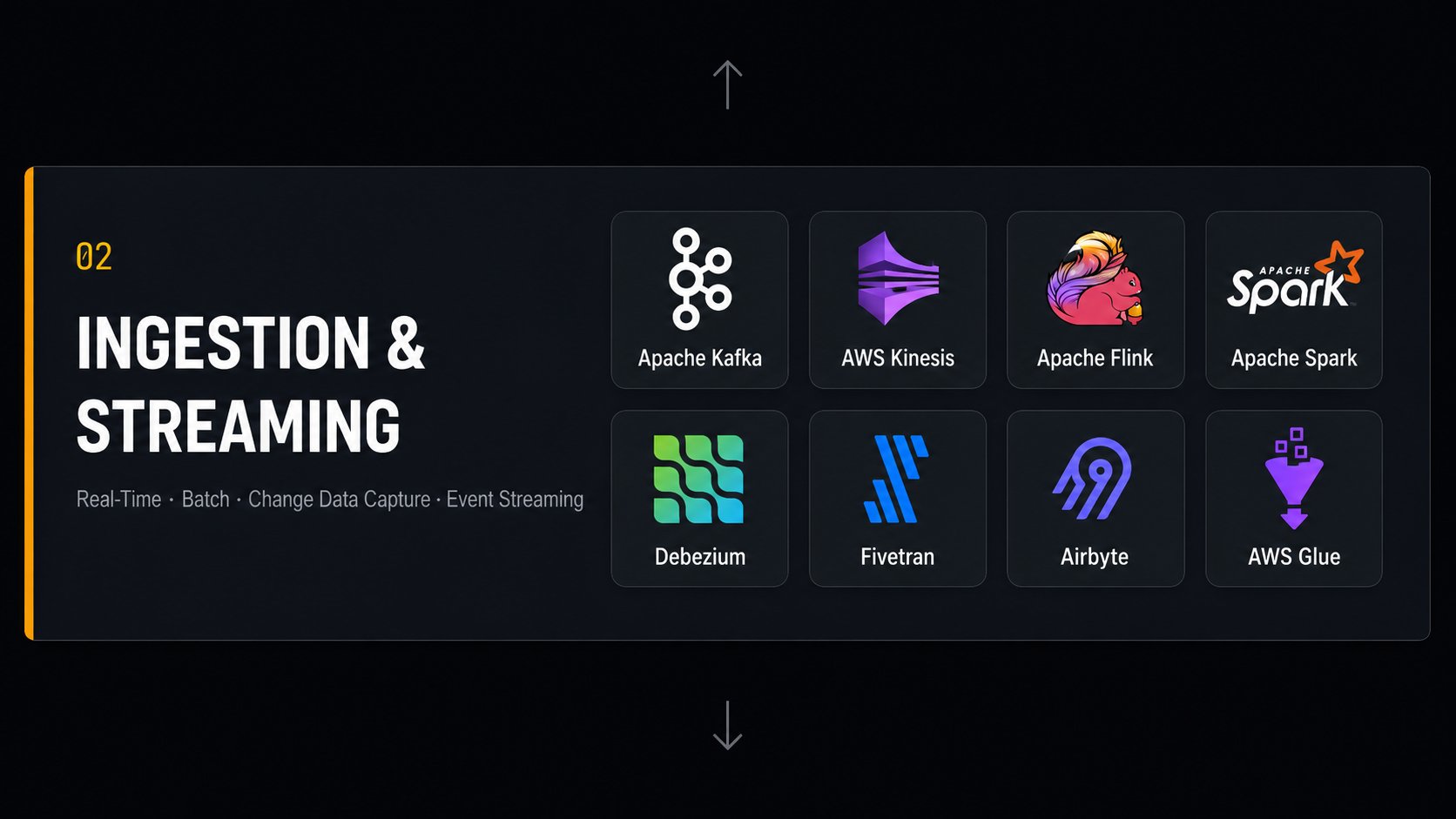
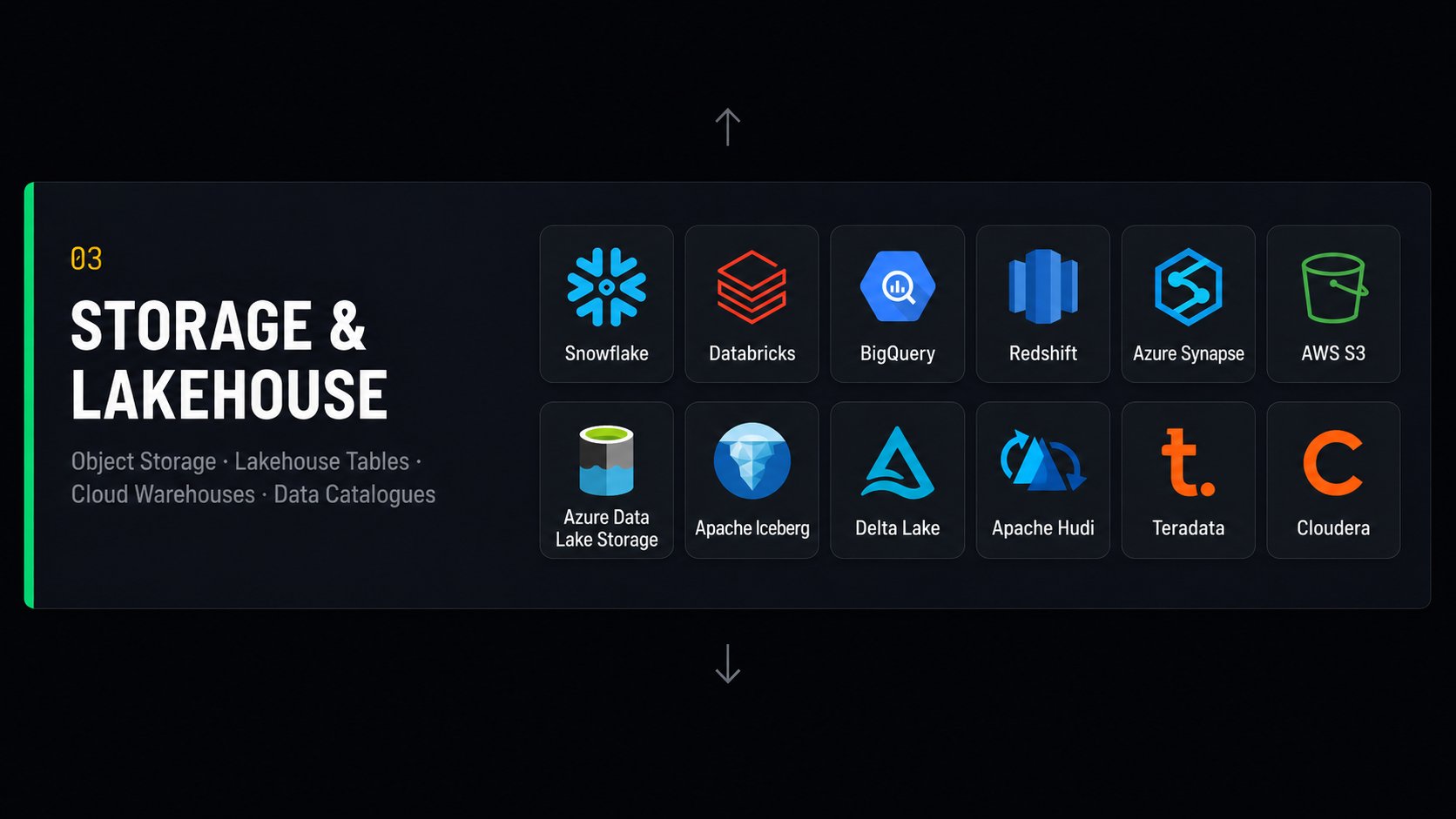
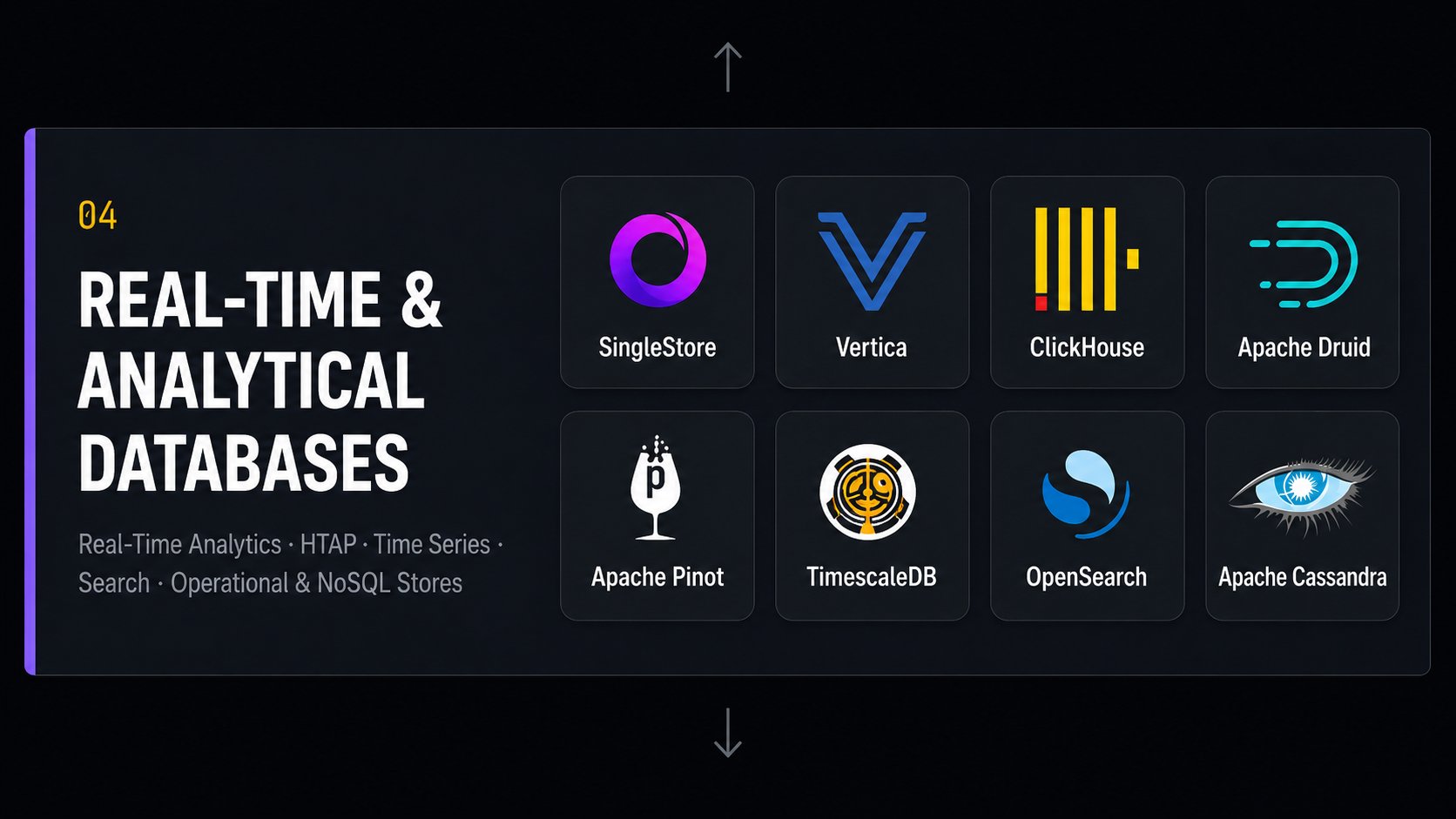
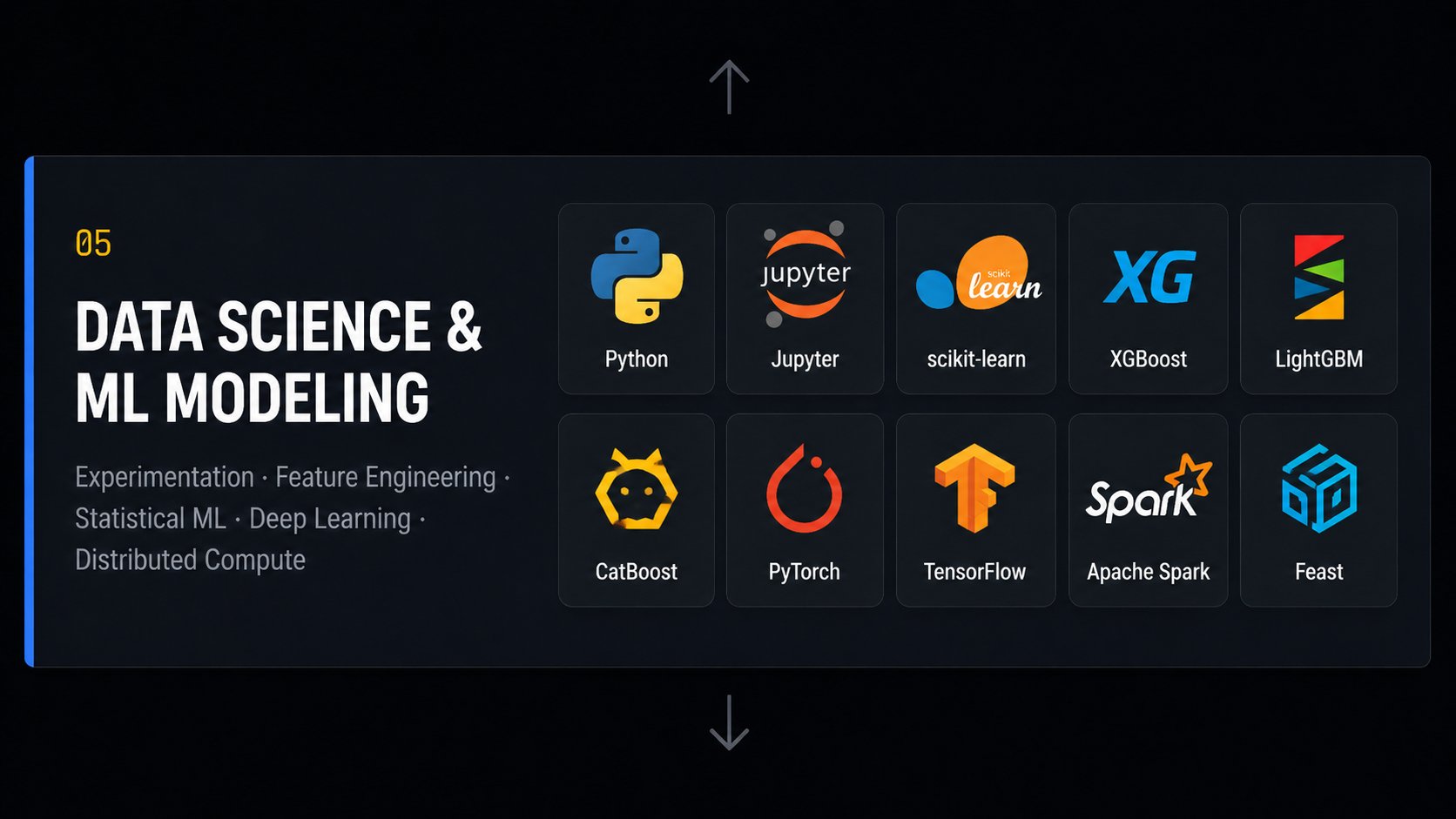
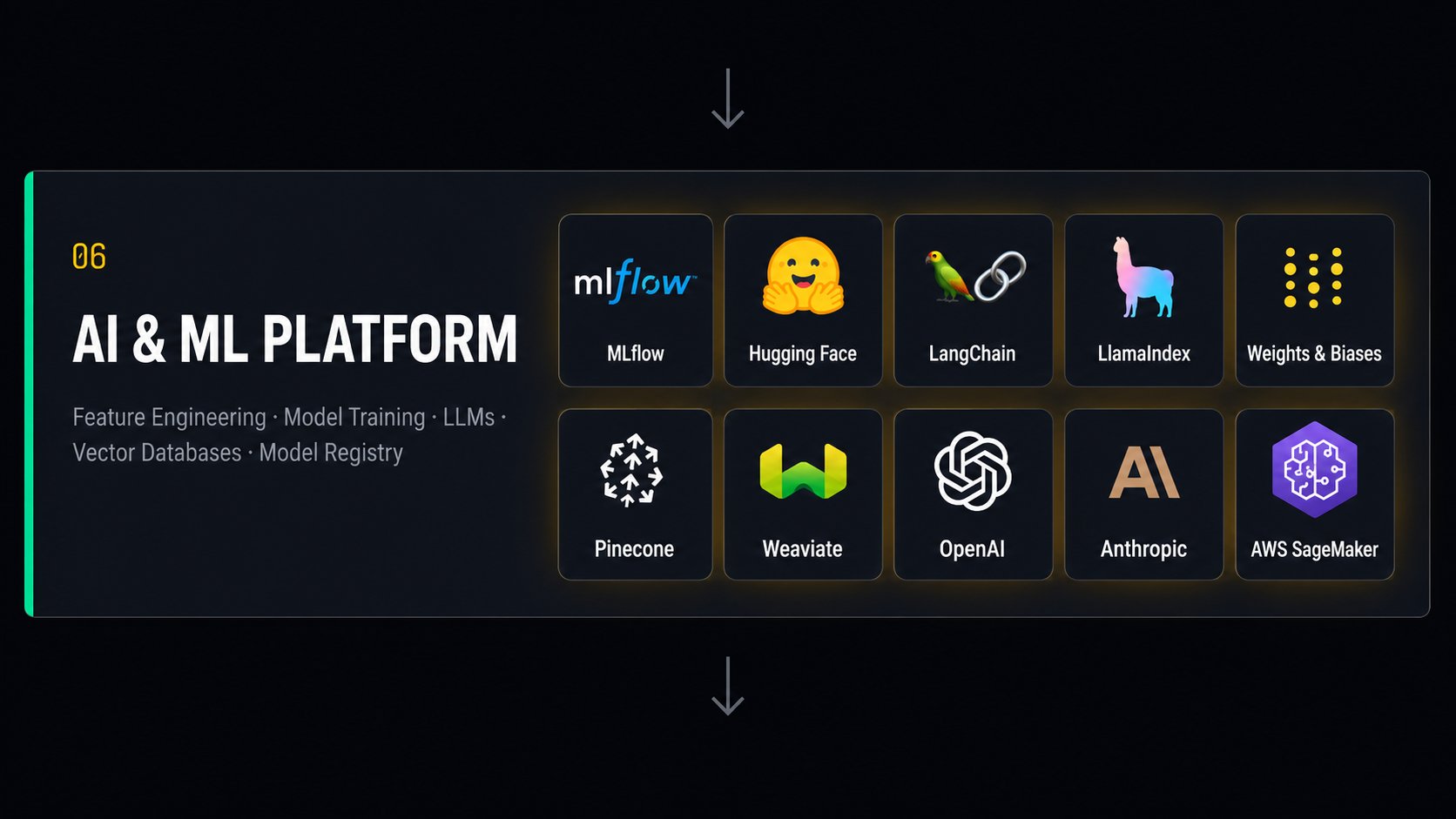
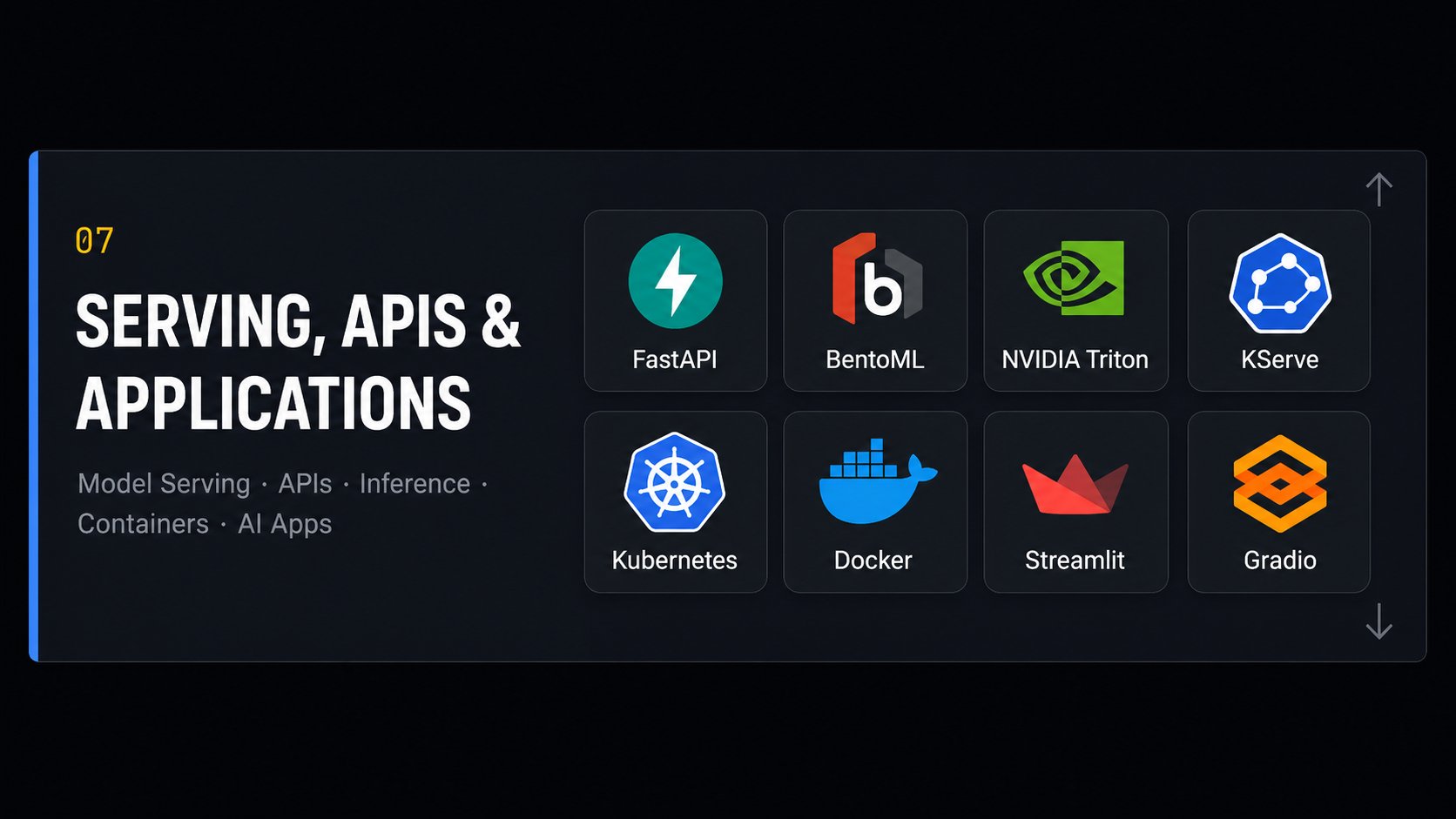
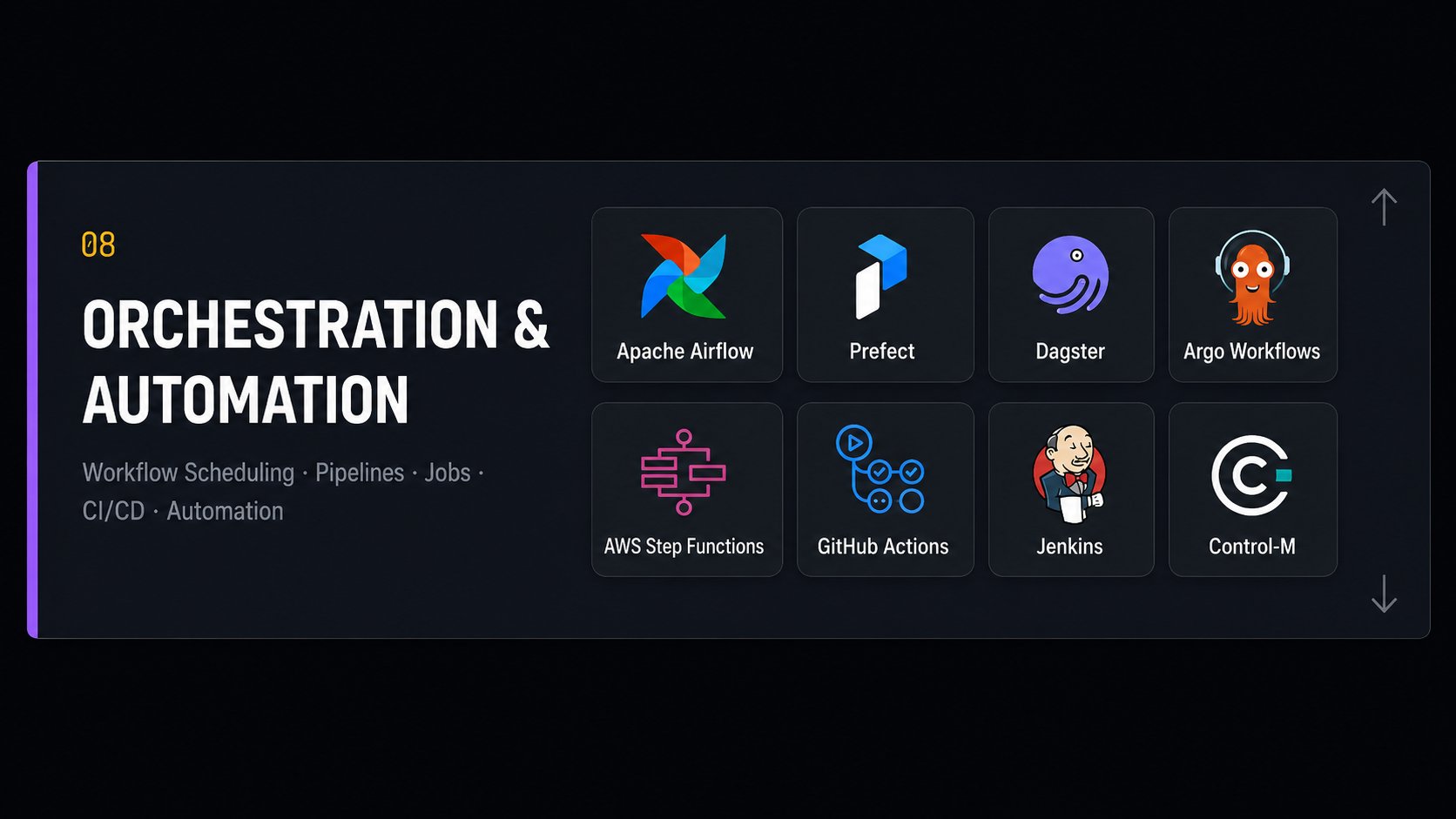
Every tool below has been deployed by QubitX engineers in a live enterprise environment. Not evaluated in a lab, not on a roadmap. This is the stack we build with — from raw data ingestion through to AI inference in production.
Ten sequential layers. Each one a distinct engineering discipline. We design, build, and own all ten — as a single integrated system, not a collection of handoffs.
Filter by category. Each card shows what we use it for, how we deploy it, and the role it plays in the full architecture.
The entry point of every data system. We design ingestion architectures that handle structured, semi-structured, and unstructured data from dozens of sources simultaneously — with sub-second latency for event-driven systems.
The lakehouse pattern combines the scale of a data lake with the reliability and performance of a data warehouse. It's the architectural standard for organisations that need both analytics and AI training on the same data layer.
The analytical query layer where business logic lives. We select warehouse technology based on the client's existing cloud estate, query patterns, and AI workload requirements — not vendor preference.
The layer that makes AI systems intelligent at runtime. Feature stores serve pre-computed features to models at inference time. Vector databases power semantic search, RAG architectures, and long-term AI memory.
The layer where models are trained, evaluated, versioned, and registered. We select platforms based on the model type, compute requirements, and the cloud estate — never a one-size-fits-all approach.
Where trained models meet production traffic. The serving layer must handle latency SLAs, versioned deployments, A/B testing, and graceful degradation. We design serving infrastructure for the traffic patterns and SLAs of each use case.
The layer where data becomes decisions. We build analytics infrastructure that serves everyone from data engineers to board members — from technical SQL interfaces to self-serve dashboards to AI-embedded insights.
The conductor of the data and ML pipeline. Orchestration determines when jobs run, in what order, with what dependencies, and what happens when they fail. The right orchestrator is determined by the complexity of the pipeline and team preference.
The layer most organisations underinvest in until it becomes a crisis. AI systems are only as trustworthy as the data they were trained on. Governance and quality frameworks ensure that data moving through the system meets the standards required for AI inference.
Deploying a model is not the end. Monitoring model performance, detecting drift, tracking feature importance over time, and triggering retraining pipelines is the operational discipline that keeps AI systems working in production beyond launch day.
We are cloud-agnostic by design. We architect for the client's existing estate — not for our preferred vendor. Every major cloud platform has been deployed in production. Multi-cloud and hybrid architectures are fully supported.
Security is not a layer — it runs through every other layer. AI systems have a distinct threat landscape from traditional software: model poisoning, prompt injection, data extraction, and adversarial inputs require architecture-level responses, not perimeter controls.
Not theoretical patterns. Each of these has been deployed on at least two live client engagements.
Sub-100ms inference pipeline for high-volume decisions — fraud detection, credit scoring, dynamic pricing. Event-driven architecture from source system through to decision API.
Retrieval-Augmented Generation for enterprise knowledge bases. Connects LLMs to structured and unstructured organisational knowledge while maintaining data governance and access controls.
Full lakehouse architecture consolidating 20–50 data sources into a governed, query-ready platform serving both operational BI and AI model training from the same data layer.
End-to-end MLOps platform supporting 10+ models in production simultaneously — training pipelines, model registry, A/B testing, drift detection, and automated retraining triggers.
Tell us your architecture challenge. We'll tell you which layers need work, what we'd recommend, and what a realistic engagement looks like.